 WellPack
How to Choose the Right Home Storage Solution?
Driven by the ‘dual carbon’ goals and power market reforms, home energy storage is shifting from a niche option to a household necessity. With many products available, making a smart, informed choice has become a key concern for more families. This guide covers working principles, system types, capacity calculation, battery selection and economic evaluation—offering a complete reference for home storage selection.
What Is Home Energy Storage and How Does It Work?
A home energy storage system is an on-site power storage unit for residential use. It stores electrical energy and supplies power when needed. The system has three main components:
1). Battery – stores electrical energy
2). Inverter – converts DC to AC for household appliances
3). Control system – monitors and manages system operations
In a typical PV + Battery configuration, solar panels generate power during the day. The power first supplies household loads. Excess energy is stored in the battery. At night or on cloudy days, the battery discharges and the inverter converts Direct Current (DC) to Alternative Current (AC) for continuous supply. The system can also interact with the grid. It charges from the grid during off-peak hours when rates are low, and discharges during peak hours for self-consumption. This enables peak-valley arbitrage and reduces electricity costs.
Identifying Your Energy Needs
Before selecting a storage system, clearly define the household’s core energy needs. Different needs require different system setups. Oversizing capacity or power without justification leads to waste. Common needs fall into four types:
1). Self-consumption – Increase PV self-use and lower electricity bills. Suitable for homes with existing or planned PV. Size the system based on PV array and sunlight conditions. When feed-in tariffs are low, storage helps avoid selling excess energy cheaply and keeps it for self-use.
2). Peak-valley arbitrage – Charge from the grid when rates are low and discharge when rates are high to capture the price gap. Payback depends on the local rate difference.
3). Backup power – Keep critical loads (refrigerators, lighting, internet, medical devices) running during outages. Focus on backup duration and switchover time.
4). Anti-reverse – For cases where grid feed-in is not allowed. Store surplus PV energy in the battery to prevent waste.
Most households have a mix of the above needs, so priorities must be set. Based on these priorities, choose the right system type:
1). Grid-tied (lowest cost) – Connected to the grid. Excess power can be exported, but the system shuts down during grid outages. Suitable for areas with stable grid supply and primary focus on cost reduction.
2). Off-grid (fully independent) – Designed for areas with no grid or unreliable supply. Relies entirely on solar and batteries. Requires larger battery capacity.
3). Hybrid (most flexible) – Supports both grid-tied and off-grid operation. Excess power can be exported and the system automatically switches to battery during outages. The most practical choice for most urban and suburban households – captures peak-valley savings while ensuring backup power.
Wellpack, the energy storage brand under Better Technology Group Limited, provides flexible and proven solutions for different scenarios:
1). Existing PV system requiring storage addition or expansion – Wellpack offers highly compatible storage solutions paired with storage inverters. These seamlessly integrate with existing PV systems and reduce retrofit costs.
2). New PV-storage system requiring high efficiency and synergy – Wellpack provides AC/DC hybrid solutions with solar-storage hybrid inverters. These enable integrated control of PV and storage in a single system.
3). Areas without grid access or with frequent outages – Wellpack offers off-grid solutions, including stackable solar-storage all-in-one units or integrated inverter units. These deliver complete power independence.
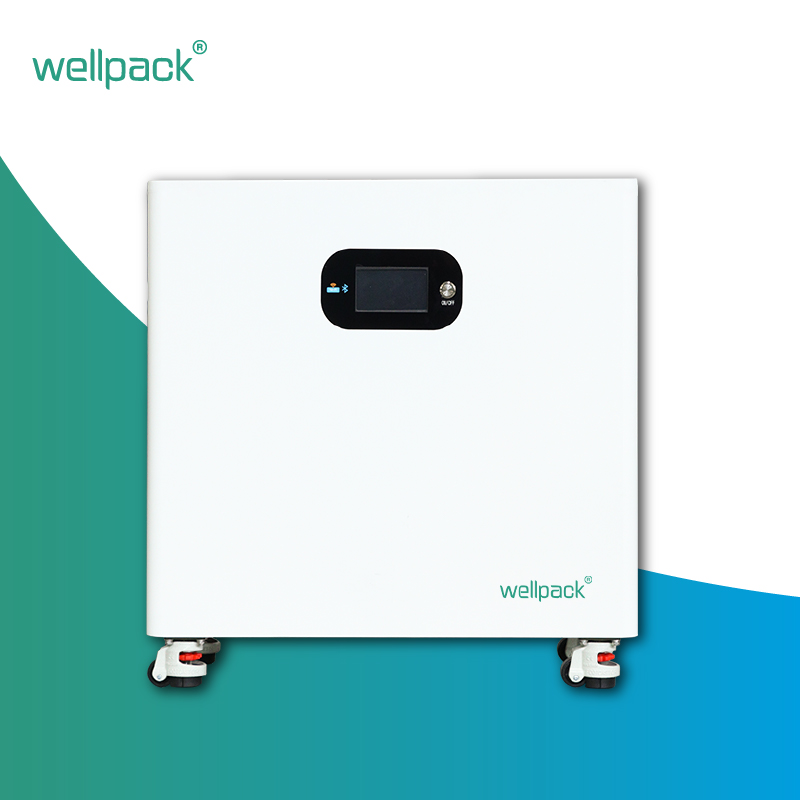
Wellpack’s integrated storage systems support both grid-tied and off-grid modes. Multiple units can be connected in parallel. These solutions adapt to various scenarios, helping households choose the right system and avoid over-configuration.(For more product details, please contact us via message.)
Looking for the right storage solution for your home?
Interested in becoming a distribution partner?
Feel free to reach out us anytime.
Sizing Capacity and Power
1). Battery Capacity: Focus on Usable Capacity, Not Nominal Capacity
Capacity is measured in kWh. Nominal capacity is a theoretical value. Usable capacity is limited by depth of discharge (DOD). For example, a 10kWh battery with 90% DOD offers only 9kWh usable. A 10%–20% margin is recommended to accommodate PV fluctuations and load variations.
Rough reference:
5kWh – Suitable for small apartments or entry-level use. Covers basic lighting and a few appliances like refrigerators.
10kWh – A common choice for modern suburban homes. Covers typical nighttime loads (lighting, refrigerators, TVs, etc.).
15kWh and above – For high-energy households (EVs, heat pumps, large AC units) or users seeking greater energy independence.
For more accurate sizing, review electricity bills from the past 12 months. Calculate average daily consumption and nighttime usage, then size the battery accordingly
2). Power Matching: Inverter Rating ≥ Total Load of Simultaneously Running Appliances
Capacity determines how much energy can be stored. Power determines how many appliances can run at once. The inverter’s rated power must be greater than the total load of all appliances running simultaneously. For example, if the combined load of air conditioners and water heaters is 5kW, choose an inverter rated at 6kW or higher.
Also consider the battery’s charge/discharge rate (C-rate). 1C means the battery can be fully discharged in one hour. 0.5C takes two hours. For most households, 0.5C is sufficient. For high-power devices or emergency backup needs, choose a high-rate model. Wellpack’s high-voltage rack-mounted battery packs are ideal for home backup and communication base stations, providing strong instantaneous output.(For more product details, please contact us via message.)
Choosing the Right Battery – LFP Is the Top Choice
Lithium iron phosphate (LFP) is the mainstream choice for home energy storage. Key advantages include:
1). Cycle life – Over 6,000 cycles, more than ten times that of lead-acid batteries (300–500 cycles).
2). Weight and size -50%~60% lighter than lead-acid at the same capacity.
3).Charging efficiency and stability-Faster charging, stable voltage, and virtually maintenance-free.
4). Lifecycle cost – Initial cost is about 3.5 times that of lead-acid, but lifespan is 7 times longer, and energy conversion efficiency is approximately 95% (lead-acid: ~70%). Over the long term, LFP is more economical.
Unless under tight budget constraints, LFP has become the factual standard for residential storage.
Cost and ROI Assessment
Investment in home energy storage covers equipment purchase, installation, and commissioning.
The payback period varies based on multiple factors, generally ranging from several years to over a decade. Key factors include:
1). Local electricity tariffs and peak-valley spreads- Wider spreads lead to faster payback.
2). Household consumption patterns- Greater usage during peak hours increases storage value.
3).Government subsidies-Some regions offer subsidies for residential storage, significantly lowering initial costs.
4). Equipment lifespan- Wellpack storage systems have a service life of over 10 years.
If you are considering a residential PV-storage system, feel free to contact us. We can help calculate the returns.
Installation and Safety
1). Installation Environment
Ensure good ventilation, rain protection, and moderate temperature. Avoid direct sunlight and heat sources. Lithium batteries generate heat during operation. Proper ventilation prevents heat buildup. For indoor installation, keep away from water heaters, dryers and other heat sources. Avoid damp basements or areas with flood risk.
2). Electrical Conditions
Before installation, confirm the main service capacity, available breaker slots in the distribution panel, and the type of grounding system. If the home already has high-power equipment such as central air conditioning, floor heating, or EV chargers, remaining capacity may be insufficient for storage integration. Advance assessment is required.
3). Regulatory Compliance
Consult the local utility provider to confirm approval for grid-tied storage, available subsidies, and fire safety requirements regarding installation location and clearance distances. Ensure full compliance and safety.