 WellPack
BESS ROI: How Fast Can It Pay Back?
What Exactly Is BESS ROI and Why Does It Matter?
If you’re considering a battery energy storage system for your home, the first question on your mind is probably the same one most people ask: how fast will this thing pay for itself? BESS ROI – return on investment – is the metric that tells you whether a storage system is a smart financial move or an expensive toy. In plain terms, it measures how much money you save (or earn) relative to what you spent, usually expressed as a percentage or a payback period in years.
Here’s why this matters right now: residential battery prices have been dropping steadily, and electricity rates in many regions keep climbing. That combination is shifting the math in favor of storage. But the exact numbers vary wildly depending on where you live, how you use electricity, and what kind of system you buy. Understanding BESS ROI isn’t just about crunching numbers – it’s about knowing whether storage makes sense for your specific situation before you write a check.
What Determines Your Payback Timeline?
Your BESS payback period isn’t some fixed number you can look up in a brochure. It’s shaped by several factors that interact in ways that can either shorten your ROI dramatically or stretch it out for years.
The single biggest driver is your electricity tariff structure. If your utility uses time-of-use pricing – meaning electricity costs more during peak evening hours and less at night – a battery lets you buy power when it’s cheap and use it when it’s expensive. That arbitrage is where most of your savings come from. The wider the gap between peak and off-peak rates, the faster your payback. On the flip side, if you have full retail net metering (where the utility pays you the same rate for exported solar power as they charge for grid power), a battery adds much less financial value because the grid itself acts as your storage.
Your solar setup matters too. If you already have solar panels, a BESS lets you store excess daytime generation instead of sending it to the grid for a low feed-in tariff. That increases your self-consumption rate – the percentage of solar power you actually use – which directly boosts your ROI. Without solar, you can still benefit from a battery by time-shifting grid purchases, but the economics are generally less compelling.
Other factors include the upfront cost of the system (which varies by brand, capacity, and installer), available incentives or rebates, and how much of your daily energy load you can shift to battery power. Even your local climate plays a role – places with more sunshine mean more solar generation to store, which improves the numbers.
How to Calculate Your Own BESS ROI
The math isn’t complicated, but it does require some honest data. Here’s the basic framework most homeowners can use.
Start with your annual electricity bill. Look at how much you pay per kilowatt-hour during peak and off-peak periods, and how many kilowatt-hours you use during each. Then estimate how much of that peak usage you could shift to battery power. A typical residential battery in the 10–16 kWh range can cover a significant portion of evening consumption for an average household.
Your annual savings = (peak kWh shifted × peak rate) + (additional solar self-consumption × avoided grid rate) – (off-peak kWh purchased × off-peak rate). Subtract any ongoing maintenance costs (minimal for most modern lithium systems). Then divide your net upfront cost (after incentives) by that annual savings number. That gives you your simple payback period in years.
For example, if a system costs $10,000 after rebates and saves you $1,500 per year on electricity, your payback is about 6.7 years. A payback of 5–8 years is considered solid for residential BESS, and anything under 5 years is excellent. Beyond 10 years, you should think carefully about whether the investment makes sense for your situation.
For a more complete picture, you can also look at internal rate of return (IRR) – a metric that accounts for the time value of money. Studies show residential BESS systems can deliver IRRs in the 10% to 23% range depending on market conditions – competitive with many traditional investments.
Realistic Payback – What to Expect
So what’s a realistic number? Based on current research and real-world data, most residential BESS installations see payback periods between 4 and 9 years. The 4-year end is for homeowners in high-rate areas with wide peak/off-peak spreads and good incentives. The 9-year end is for regions with flatter rates or less favorable policies.
Here’s where things get interesting. Battery costs are still falling – lithium-ion prices are expected to drop below $100/kWh in the near future, and when that happens, payback periods will shorten across the board. Some analyses suggest that a 50% drop in battery prices could push payback under 5.2 years even in average markets. That means if you’re on the fence, the trend is moving in your favor – though waiting also means missing out on savings in the meantime.
One caveat: these are simple payback figures. They don’t include the value of backup power during outages, which for some homeowners is worth far more than the pure financial return. If you live in an area with unreliable grid service, the peace of mind alone can justify a system that takes a bit longer to pay back financially.
Beyond the Numbers – What Else to Consider
ROI isn’t the whole story. When evaluating a BESS, you should also think about system lifespan, degradation, and replacement costs. Most lithium iron phosphate (LiFePO₄) batteries last 3,000–5,000 cycles, which translates to 8–10+ years of daily use. That means your payback period needs to fit comfortably within the useful life of the battery – otherwise you’re replacing the system before it pays for itself.
Battery degradation is another factor. Capacity slowly declines with each charge/discharge cycle, so your savings in year 8 won’t be as high as in year 1. Quality systems with good battery management systems (BMS) minimize this effect, but it’s worth understanding that the numbers you calculate today are optimistic averages over the system’s lifetime.
Also consider scalability. Can you add more capacity later if your needs grow? Is the system compatible with different inverters and monitoring platforms? These practical questions matter just as much as the financial ones, especially if you plan to stay in your home for the long haul.
Getting the Most from Your Investment
If you’re ready to move forward, the key to maximizing your BESS ROI is choosing a system that balances upfront cost, performance, and longevity. You want something that’s easy to install (saving you installation fees), reliable enough to last through its payback period, and flexible enough to work with your existing or future solar setup.
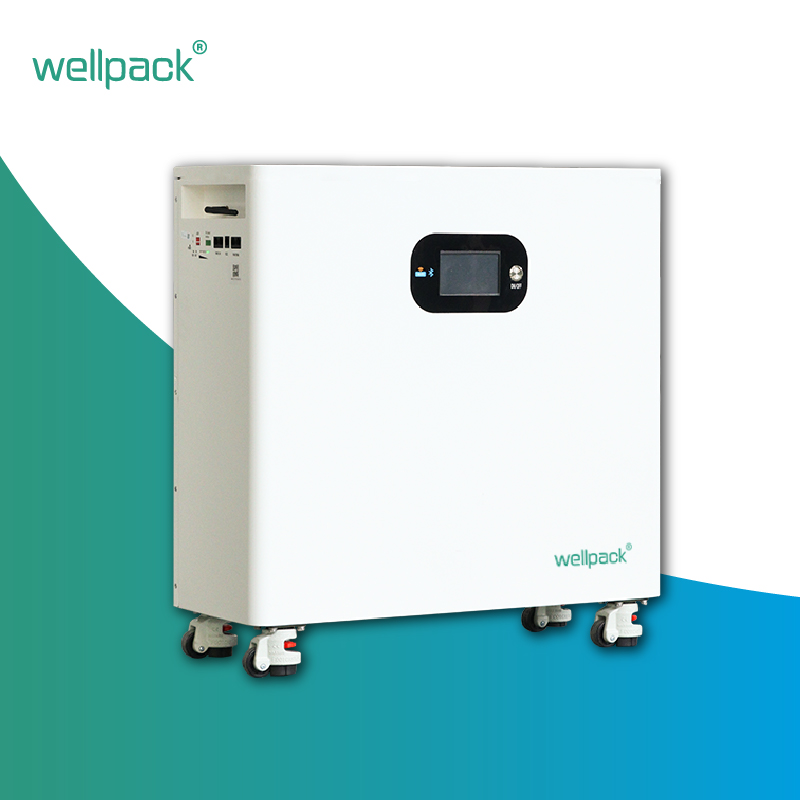
That’s where Wellpack’s 16.07kWh residential solar energy storage solution comes in. This all-in-one system combines a 12kW off-grid inverter with a 16.07kWh LiFePO₄ battery pack in a compact, plug-and-play design that requires no electrician for installation – you simply roll it into place and connect. The smart BMS provides automatic protection and multi-protocol communication, so it works with most solar inverters and home automation systems. With a cycle life of 3,000–5,000 charges and dual monitoring via on-unit display and mobile app, it’s built to deliver reliable performance through its entire payback window and beyond. For homeowners serious about energy independence and a strong BESS ROI, this system offers the capacity, safety, and simplicity that make the numbers work.