 WellPack
Why Lithium Start-Stop Batteries Fail in Winter (And How to Fix It)
What Actually Happens Inside a Lithium Battery in the Cold
Lithium batteries rely on chemical reactions to generate power. When temperatures drop below freezing, those reactions slow way down. The particles in the electrolyte move slower, ions have a harder time shuttling between electrodes, and internal resistance shoots up. What this means for you is simple: the battery still has energy stored inside, but it can’t deliver that energy fast enough to crank your engine. A diesel starter motor might need 800 to 1,500 amps of inrush current. At -10°C, a lithium battery that cranks just fine in summer might only deliver 60-70% of its rated power. That’s the gap where your truck won’t start.
The Real Problem Isn’t Just Slower Starts
Here’s what catches a lot of people off guard. Cold weather doesn’t just reduce power output. It also permanently damages the battery if you try to charge it below freezing. Most LiFePO4 cells should not be charged below 0°C. When you force a charge in freezing conditions, lithium metal can plate onto the anode instead of intercalating properly. This is called lithium plating, and it’s irreversible. Each time it happens, you lose capacity and cycle life. That’s why your BMS might refuse to accept a charge when it’s cold. It’s not broken. It’s protecting itself. The tricky part is that a battery that won’t accept a charge also won’t let you jump-start it in the traditional way. The BMS sees the cold, sees the charging attempt, and blocks it.
Your BMS Might Be Shutting You Down on Purpose
Most people don’t realize that the battery management system is the gatekeeper. In cold weather, the BMS monitors temperature along with voltage and current. If the internal temperature of the battery drops below a certain threshold—usually around 0°C to -10°C depending on the manufacturer—the BMS disables charging entirely. This is a safety feature, not a defect. But from your perspective, the battery appears dead. You hook up a charger, nothing happens. You press the start button, nothing happens. The battery has plenty of energy, but the BMS won’t let it flow. This is one of the most common lithium battery cold weather starting problems, and it’s also the most misunderstood. The battery isn’t dead. It’s locked.
Why Your Jump Starter or Charger Won’t Save You
Standard jump starters and battery chargers are designed for lead-acid batteries. They don’t communicate with a lithium BMS. When you connect one to a lithium battery that has gone into low-temperature protection mode, the charger sees an open circuit and assumes the battery is faulty. It won’t deliver current. Even if it does, the BMS will block it. You might try warming the battery with a blanket or bringing it inside, and that can work if you have the time and the battery is portable. But for a truck battery that’s bolted in place, that’s not practical. You need a solution that works where the battery sits, not one that requires you to disassemble things in freezing weather.
The Fix That Actually Works
The only reliable fix for lithium battery cold weather starting problems is a battery with built-in self-heating. A self-heating battery uses the battery’s own energy to warm itself up before it allows charging or high-current discharge. The heating elements warm the cells to a safe operating temperature, and once the preset temperature is reached, the battery works normally. This solves both problems at once. It gets the battery warm enough to deliver full cranking power, and it gets the battery warm enough to accept a charge from the alternator or a charger. Without self-heating, you’re left with workarounds that don’t really work when you need them most.
What to Look for in a Winter-Ready Lithium Start-Stop Battery
If you’re shopping for a lithium battery that won’t let you down in winter, look for three things. First, built-in heating. Not just low-temperature protection that shuts the battery down, but active heating that warms it up. Second, a BMS that’s smart enough to manage the heating cycle without user intervention. Third, enough cold cranking amps for your engine’s requirements. A battery that can’t deliver your engine’s CCA requirement at -18°C won’t start your vehicle, period.
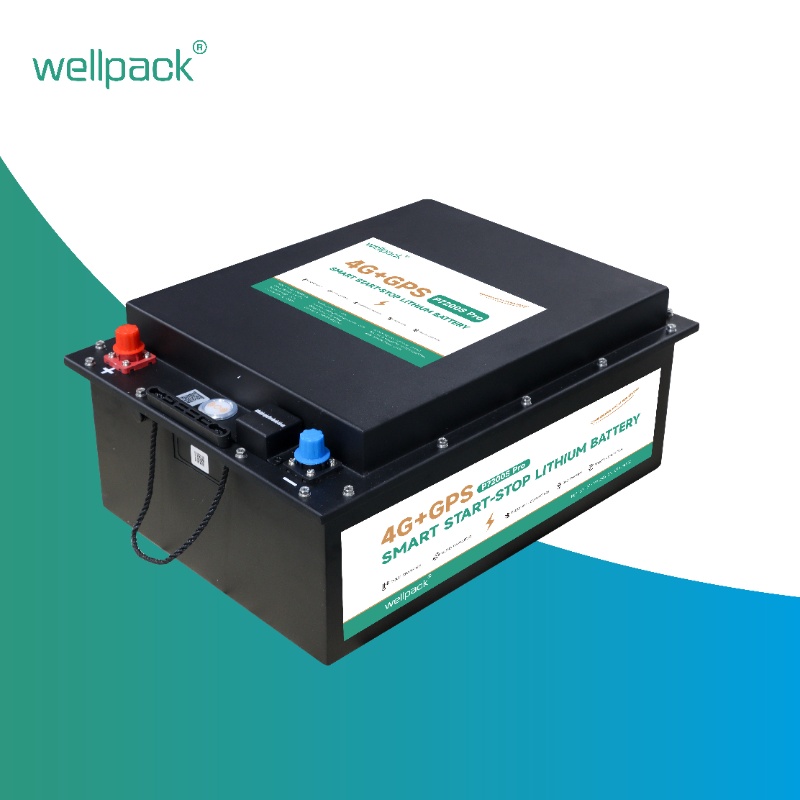
One product that checks all these boxes is the WellPack 4G+GPS Smart Start-Stop Lithium Battery P7200s Pro. It’s built with Grade A LiFePO4 cells and an intelligent BMS with eight layers of protection. What makes it stand out for winter use is the integrated heating function—heating films between the cell packs warm the battery automatically in extreme cold, so it works when you need it. You can monitor battery data and control it remotely via the built-in 4G module, which also supports GPS tracking. It’s rated IP65 for weather resistance and has a super capacitor board for stable voltage output. If you’re dealing with lithium battery cold weather starting problems in a truck or RV, this battery is built to handle exactly that situation.