 WellPack
How to Choose the Right Home Energy Storage System
Driven by carbon-neutral goals and power market reforms, home energy storage is shifting from a niche option to essential household infrastructure. With a growing array of products and packages on the market, making a science‑based choice—rather than following trends—is now a key concern for many families. This guide walks you through working principles, system types, capacity sizing, battery selection, and economic assessment to help you design a tailored solution.
What Is Home Energy Storage and How Does It Work?
A home energy storage system is essentially a device that stores electricity for later use. It consists of three core components: the battery (stores energy), the inverter (converts DC battery power to AC household power), and a control unit (monitors and manages operation).
In the most common “PV + storage” setup, solar panels generate power during the day—first feeding household loads, with surplus stored in the battery. At night or on cloudy days, the battery discharges through the inverter to supply the home. The system can also interact with the grid: charging from the grid when tariffs are low and discharging during peak rate periods, enabling peak‑shaving and bill savings.
Define Your Needs
Before choosing a system, clarify your primary use case—different needs lead to completely different configurations. Blindly opting for large capacity or high power only wastes money. Common scenarios include:
- Self‑consumption – Increase solar self‑use and save on bills. Ideal for homes with or planning PV; match storage capacity to PV size and sunlight conditions.
- Peak‑shaving (arbitrage) – Charge at off‑peak rates and discharge at peak rates. Payback depends on your local tariff spread.
- Backup power – Keep critical loads (fridge, lighting, internet, medical devices) running during outages. Focus on backup duration and switchover speed.
- Anti‑reverse – For areas that do not allow feed‑in, store excess solar instead of wasting it.
Most households combine several of these, so set clear priorities. Based on that, choose the right system type:
- Grid‑tied (on‑grid) – Lowest cost; can sell surplus to the grid, but cannot operate during a blackout. Best for stable grids and bill‑saving focus.
- Off‑grid – Fully independent; relies on solar + batteries. Suitable for areas with no grid or very unreliable supply; needs larger battery banks.
- Hybrid – Most flexible; works both on‑grid and off‑grid, allowing feed‑in and automatic islanding during outages. The most practical choice for most urban and suburban homes—enjoys arbitrage and provides backup peace of mind.
Wellpack, the energy storage brand under Better Technology, offers flexible, proven solutions:
- For existing PV systems needing storage addition or expansion: Wellpack’s highly compatible storage solutions, paired with storage inverters, integrate seamlessly with your current PV setup, reducing retrofit costs.
- For new PV‑storage systems seeking efficient synergy: Wellpack’s AC/DC hybrid solution, using solar‑storage hybrid inverters, unifies PV and storage control in one step.
- For areas without grid coverage or with frequent outages: Wellpack’s off‑grid solutions, including solar‑storage stackable all‑in‑one or integrated inverter‑charger units, deliver complete independent power.
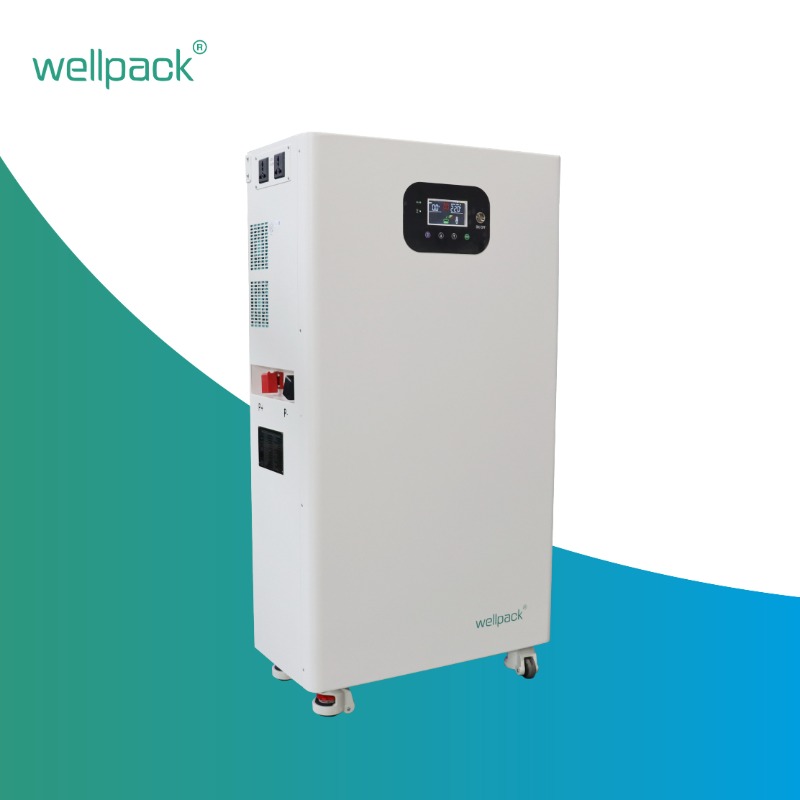
Wellpack’s all‑in‑one storage systems support both hybrid and off‑grid modes, allow parallel connection of multiple units, and flexibly adapt to all the above scenarios—helping you choose right‑sized equipment without over‑specification.
Sizing Capacity and Power – The Core Selection Steps
(1) Battery Capacity – Focus on “Usable Capacity,” Not “Nominal”
Capacity is measured in kWh. Nominal capacity is theoretical; usable capacity is limited by Depth of Discharge (DoD). For example, a 10 kWh battery with 90% DoD gives only 9 kWh usable. Always add a 10‑20% buffer for solar variability and load surges.
Rough guidelines:
- 5 kWh – Small apartments or entry‑level; covers basic night lighting and a refrigerator.
- 10 kWh – The “sweet spot” for modern suburban homes; handles typical night loads (lights, fridge, TV, etc.).
- 15 kWh+ – High‑consumption households (EVs, heat pumps, large AC) or those seeking higher energy independence.
For greater accuracy, review your last 12 months of electricity bills, calculate average daily and nighttime consumption, and size accordingly.
(2) Power Rating – Inverter Power ≥ Total Simultaneous Load
Capacity determines “how much” you store; power determines “how many” appliances you can run at once. The inverter’s rated power must exceed the total wattage of all devices that may run simultaneously. For instance, if your AC, water heater, etc., total 5 kW, choose a 6 kW or higher inverter.
Also consider the battery’s charge/discharge C‑rate: 1C means fully discharged in 1 hour; 0.5C takes 2 hours. For most homes, 0.5C is sufficient. If you have high‑power loads or urgent backup needs, opt for a higher‑rate product. For example, Wellpack’s high‑voltage rack‑mounted battery packs deliver strong instantaneous output for home backup and communication base stations.
Battery Chemistry – Lithium Iron Phosphate (LFP) Is the Clear Winner
Today, LFP batteries dominate the home storage market for good reasons:
- Cycle life – Over 6,000 cycles, more than ten times that of lead‑acid (300‑500).
- Weight and volume – 50‑60% lighter than lead‑acid for the same capacity.
- Efficiency and stability – Faster charging, flatter voltage, and virtually maintenance‑free.
- Lifecycle cost – Initial cost is about 3.5× lead‑acid, but lifespan is 7× longer, and round‑trip efficiency is ~95% (vs. ~70% for lead‑acid). Over the long term, LFP is more economical.
Unless you have an extremely tight upfront budget, LFP is already the de facto standard for residential storage.
Cost and Return on Investment
Investment includes equipment, installation, and commissioning. Payback periods vary widely—from a few years to over a decade—depending on:
- Local electricity rates and peak/off‑peak spreads – larger spreads shorten payback.
- Household consumption patterns – more peak‑time usage increases storage value.
- Government subsidies – some regions offer grants that significantly reduce upfront costs.
- Equipment lifespan – Wellpack storage units are designed for 10+ years of service.
Interested in installing a home PV‑storage system? Contact us for a personalized payback estimate.
Installation and Safety
Installation Environment
Ensure good ventilation, weather protection, and moderate temperatures—avoid direct sunlight and heat sources. Lithium batteries generate heat; proper airflow prevents heat build‑up. For indoor placement, keep away from water heaters, dryers, etc., and avoid damp or flood‑prone basements.
Electrical Conditions
Before installation, verify your main service capacity, breaker panel spare capacity, and grounding type. If you already have central AC, underfloor heating, EV chargers, or other high‑draw equipment, the remaining capacity may not support a storage system—evaluate in advance.
Regulatory Compliance
Check with your local utility about grid‑connection permissions, feed‑in tariffs, and any incentive programs. Also confirm fire safety regulations regarding placement and clearance distances to ensure a compliant and safe installation.