 WellPack
How to Choose the Right Start-Stop Battery for Your Car
What Makes a Start-Stop Battery Different
If your car shuts off automatically at red lights and restarts when you lift your foot off the brake, it doesn’t use a regular car battery. It needs a start-stop battery, built to handle hundreds of engine restarts a day without wearing down. A conventional battery is designed for one or two starts per trip. A start-stop battery might cycle 30,000 to 40,000 times over its lifespan, since the engine turns off and on every time the car idles in traffic. That’s the core difference, and it’s why swapping in a standard battery on a start-stop vehicle usually leads to early failure, dashboard warnings, or the stop-start feature disabling itself to protect the engine.
Most factory-fitted start-stop batteries are either AGM (absorbent glass mat) or, increasingly, lithium iron phosphate (LiFePO4). Both are built to tolerate deep partial cycling, meaning they don’t need to be fully charged to keep working reliably. That’s important because a start-stop battery rarely sits at 100 percent charge; it’s constantly being drained a little and topped up again as the engine cycles.
Signs Your Start-Stop Battery Is Failing
The most obvious sign is that the start-stop function stops working. The car will still start normally, but it won’t shut off at stops anymore, and you may see a message saying the system is temporarily unavailable. This isn’t a coincidence; the car’s computer monitors battery health and disables auto stop-start when the battery can’t reliably restart the engine.
Other symptoms include slower cranking, dimming interior lights when the engine cuts out, or a battery warning light on the dash. If you notice the stop-start feature working less often, especially in cold weather or after short trips, the battery is likely losing capacity. A start-stop battery under three years old shouldn’t show these symptoms, so if it does, it’s worth having the battery tested rather than waiting for it to fail completely, which usually happens at the worst possible time.
Key Specs to Check Before Buying
Not every battery labeled for start-stop use will fit or perform the same way. A few numbers matter more than the rest.
Cold cranking amps (CCA) tells you how much current the battery can deliver to start the engine in cold conditions. Match or exceed the CCA rating listed in your owner’s manual; going lower can leave you stranded on a cold morning. Reserve capacity matters too, since it reflects how long the battery can run essential systems if the alternator fails. Cycle life is the number that separates a good start-stop battery from a mediocre one — look for at least 3,000 to 4,000 cycles if you’re comparing options, since this directly affects how many years the battery will realistically last under stop-start conditions.
Group size and terminal layout also need to match your vehicle exactly. A start-stop battery that’s a fraction too tall or has terminals in the wrong position won’t fit properly, even if the electrical specs are correct. Check your existing battery’s label or your vehicle’s manual before ordering a replacement.
AGM or Lithium Start-Stop Battery
AGM batteries have been the standard start-stop battery choice for over a decade. They handle vibration well, don’t leak, and tolerate partial charging better than older flooded lead-acid designs. They’re also widely available and generally cheaper upfront.
Lithium start-stop batteries, particularly LiFePO4 versions, are becoming more common because they last longer, weigh less, and charge faster. A lithium start-stop battery typically lasts two to three times longer than an AGM equivalent, and it maintains stable voltage output even as it discharges, which means more consistent performance for onboard electronics. The higher purchase price is usually offset over time by not needing a replacement every few years. For vehicles that also run auxiliary equipment, like refrigerators, air conditioning units, or power tools while parked, lithium batteries handle that extra load far better than AGM.
If your vehicle sits in extreme heat or cold for long periods, or if you rely on stable power for equipment beyond just starting the engine, lithium is generally the more durable option long term.
Installation and Care Tips
Before installing a new start-stop battery, make sure the vehicle’s battery management system recognizes it. Many modern cars need the battery to be registered through the onboard computer after replacement, otherwise the charging system won’t calibrate correctly and the stop-start feature may not re-enable. This step is often missed and is a common reason people think their new battery is faulty when it isn’t.
Keep terminals clean and free of corrosion, and check that the battery is securely mounted, since start-stop batteries can be more sensitive to vibration damage over time due to the constant cycling. If your climate swings between very hot summers and cold winters, look for a battery with built-in temperature protection or heating, which helps prevent capacity loss and slow starts during cold snaps.
Avoid letting the battery sit fully discharged for extended periods, even if it’s rated for deep cycling. Regular use and periodic monitoring, whether through a dashboard alert or a Bluetooth-connected app, will extend the working life of any start-stop battery significantly.
Our Recommendation
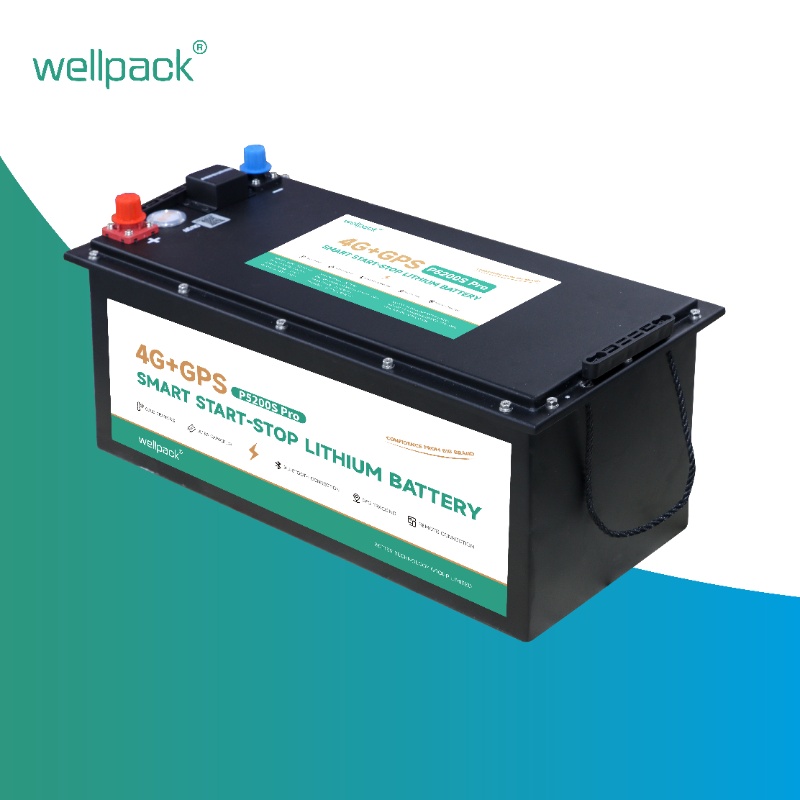
For drivers who want a start-stop battery that goes beyond basic replacement, the WellPack 4G+GPS Smart Start-Stop Lithium Battery P5200s Pro is worth a look. Built with Grade A LiFePO4 cells and a 25.6V, 206Ah capacity, it’s designed specifically to handle the frequent cycling that start-stop systems demand, with a rated life cycle of 4,000 or more. It includes eight layers of protection against over-charge, over-discharge, short circuit, and extreme temperatures, along with a built-in heating function that keeps the battery working in cold conditions where standard batteries often struggle. Bluetooth and 4G connectivity let you monitor battery status and control power remotely, while the IP65-rated, waterproof-sealed housing adds durability for vehicles exposed to the elements. For anyone tired of replacing a start-stop battery every couple of years, this is a genuinely long-term solution.