 WellPack
How to Find the Best Energy Storage Solution for Your Business
What an Energy Storage Solution Actually Includes
When people search for energy storage solutions, they’re often picturing a simple battery box sitting outside a building. In reality, a proper commercial energy storage solution is a combination of several systems working together. You have the battery pack itself, a power conversion system (PCS) that switches energy between AC and DC, a battery management system (BMS) that monitors cell health, an energy management system (EMS) that decides when to charge or discharge, plus cooling and fire protection. Older setups had these parts installed separately, which meant more wiring, more failure points, and more time spent on maintenance. Most energy storage solutions sold today are integrated cabinets, meaning all of this comes pre-assembled in one enclosure. That matters for anyone comparing quotes, because a lower price on a standalone battery pack often hides the extra cost of buying and wiring everything else separately.
How Much Storage Capacity You Need
This is the question most people get wrong before they even start comparing energy storage solutions. Capacity should be based on your actual load profile, not a rough guess. Pull your utility bill and look at your peak demand in kW and your average daily consumption in kWh. If your goal is backup power, multiply your critical load by the number of hours you want covered. If your goal is peak shaving, look at how many kW you’d need to shave off during your highest-demand periods to avoid demand charges. A system sized too small won’t cover your peak load, while one sized too large adds cost without adding value. For most small and mid-sized commercial sites, capacities in the 100kW to 250kW range with several hundred kWh of storage cover daily peak shaving and a few hours of backup, but industrial operations with heavier loads may need multiple units connected together.
Battery Chemistry and Safety Standards
Not all batteries used in energy storage solutions are built the same way. Lithium iron phosphate, usually shortened to LiFePO4 or LFP, has become the standard for commercial and industrial storage because it’s thermally stable and far less prone to thermal runaway than older lithium chemistries. It also tends to hold up better over repeated charge and discharge cycles, which matters if you’re cycling the system daily for peak shaving. When you’re comparing energy storage solutions, ask about cycle life ratings, operating temperature range, and whether the system includes automatic fire suppression and gas detection. A unit without independent safety certification and a documented fire protection system is a risk you don’t want sitting next to your facility. Reputable suppliers will provide test reports and certification documents without you having to ask twice.
Indoor Versus Outdoor Installation
Where you plan to put the system changes what kind of energy storage solution makes sense. Outdoor installations need a high IP rating, typically IP54 or IP55, to handle rain, dust, and temperature swings without extra housing. Cooling method matters here too. Air-cooled cabinets work well in moderate climates and are simpler to service, since there’s no coolant loop to maintain. Liquid-cooled systems handle higher heat loads more efficiently and are often chosen for hotter regions or higher-density installations, but they come with more complex maintenance requirements. If you’re mounting the unit against a wall, in a parking area, or on a rooftop, check the operating temperature range listed by the manufacturer against your local climate rather than assuming any cabinet will work anywhere.
Costs, Savings, and Payback Time
The financial case for energy storage solutions comes down to a few things: your utility’s demand charge structure, how much your rates vary between peak and off-peak hours, and whether local incentives or rebates apply. Peak shaving reduces the demand charge portion of your bill by discharging stored energy during your highest-usage windows instead of pulling more from the grid. Load shifting takes advantage of time-of-use rate differences by charging when electricity is cheap and using stored power when it’s expensive. Backup power has a different kind of value, protecting you from outage-related losses rather than lowering your monthly bill. Payback periods vary widely depending on your rate structure and how the system is used, so it’s worth running the numbers against your actual utility bills rather than relying on a generic estimate from a sales brochure.
Picking the Right System for Your Site
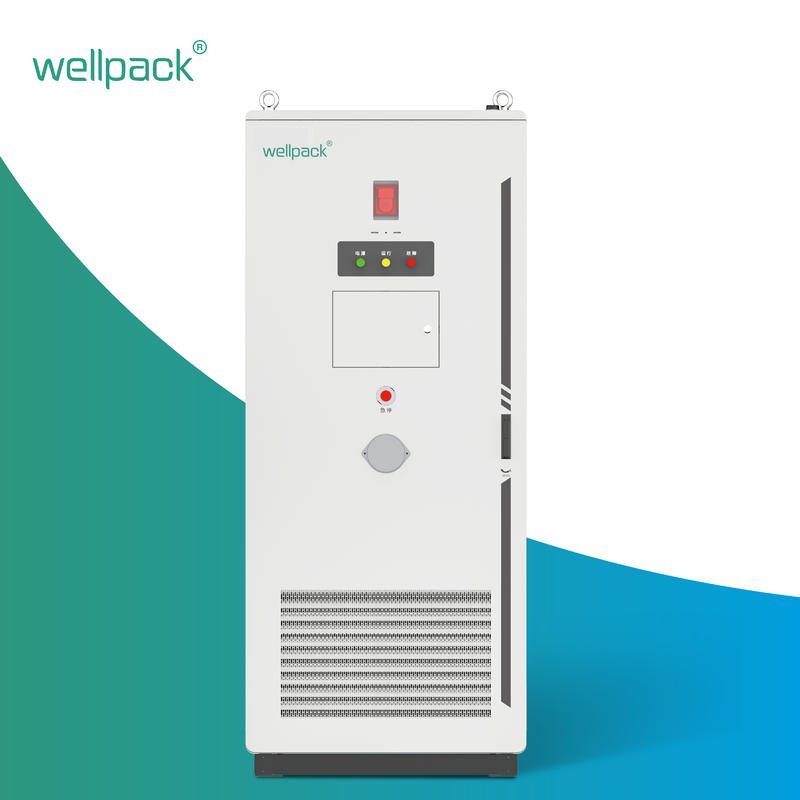
Once you know your load profile, safety requirements, and installation environment, choosing between specific energy storage solutions gets a lot easier. Wellpack’s 100kW/215kWh air-cooled energy storage integrated cabinet is worth a look if you fall into the mid-size commercial or industrial range described above. It brings the battery, PCS, EMS, BMS, air cooling, and fire protection together in a single outdoor-rated enclosure, which cuts down on installation time and the number of components you have to manage separately. The LiFePO4 cells and air-cooled thermal design are built for stable performance across a wide temperature range, and the cabinet supports parallel connection with additional units if your power or capacity needs grow later. It’s suited for peak shaving, load shifting, solar integration, and backup power, which covers most of the use cases businesses are actually trying to solve with energy storage solutions in the first place. If your load profile lines up with the 100kW/215kWh range, it’s a solid starting point to request a quote and compare against.