 WellPack
Power Outage? Household Energy Storage Keeps Fridge & Wi-Fi Alive
Power Outage? Household Energy Storage Keeps Fridge & Wi-Fi Alive
When the grid drops, the first things to fail are the ones you rely on most: the refrigerator starts warming, the Wi-Fi goes dark, and a work-from-home morning turns into a scramble. A well-sized household energy storage system changes that moment from a crisis into a non-event. This guide walks through how to size a home battery backup, what specs actually matter, and which trade-offs are worth making—so you can request a quote with confidence instead of guessing.
Start With Critical Loads, Not Your Total Bill
The biggest mistake buyers make is sizing a power outage battery backup from their monthly kilowatt-hour consumption. Your home might use 30 kWh a day, but during a blackout you rarely need all of it. You need the fridge, the internet router, a few lights, possibly a medical device, and maybe a laptop.
A modern refrigerator draws 100–400 W while running and cycles on and off through the day. A Wi-Fi router and modem together pull only 10–20 W. LED lighting adds 5–20 W per bulb. Added up, keeping your home connected and your food cold typically requires 1.5–3 kWh per day, not the full household load.
List your must-have devices, note each one’s wattage from the appliance label, and multiply by the hours you want them to run. That number is your real target capacity.
How Much Capacity Covers a Real Outage
Industry guidance and field data suggest the following starting points for a home battery backup:
| Backup Goal | Typical Capacity | What It Runs |
|---|---|---|
| Short emergency | 2–5 kWh | Wi-Fi, phones, lights, laptop |
| Essential home loads | 5–10 kWh | Refrigerator, lights, internet, selected outlets |
| Extended essential backup | 10–15 kWh | Essentials plus home office, pumps, selected appliances |
| Partial whole-home | 15–25 kWh | More circuits, limited HVAC |
For most households, a 10–20 kWh household energy storage unit delivers comfortable partial-home backup through multi-day outages, especially when paired with solar recharge. A 10 kWh battery running a 500 W essential load can last around 20 hours; the same battery at a 2.5 kW load lasts closer to four hours. The math is simple: usable capacity divided by average load equals runtime.
Capacity Is Not the Same as Power Output
A common point of confusion in any home battery backup evaluation is the difference between kWh (capacity) and kW (continuous power). A 10 kWh battery with only a 2 kW inverter cannot start a refrigerator compressor that briefly needs 2.2 kW, even though the watt-hours are sufficient on paper. Motor-driven appliances—fridges, sump pumps, well pumps—draw 2–3× their rated power for a split second at startup.
When reviewing a household energy storage specification, confirm two numbers: the continuous output in watts and the surge rating. For a typical home, an inverter capable of 1,800 W continuous with 3,600 W surge handles most essential loads. Larger systems targeting air conditioning or electric stoves need proportionally higher ratings.
Why LiFePO4 Has Become the Default Chemistry
For stationary residential storage, lithium iron phosphate (LiFePO4) has overtaken older lithium chemistries and lead-acid for three concrete reasons: it tolerates high states of charge without degradation, it runs cooler, and it cycles for thousands of rounds. Most quality residential battery storage on the market in 2026 is LiFePO4 for exactly these reasons. A typical LiFePO4 home battery delivers 3,000–5,000 charge cycles, which translates to 8–10+ years of daily use. By contrast, lead-acid batteries last only 3–7 years and require more maintenance. If you are comparing a household energy storage proposal, LiFePO4 should be your baseline expectation, not a premium upgrade.
Switchover Speed, BMS, and Inverter Compatibility
During a power outage, the gap between grid failure and battery takeover determines whether your Wi-Fi reboots. Quality systems switch in under 20 milliseconds, effectively functioning as a UPS for sensitive electronics. Any household energy storage you consider should publish this specification.
Equally important is the Battery Management System (BMS). A smart BMS guards against overcharge, deep discharge, short circuits, and temperature extremes. It also communicates with your inverter. Mainstream protocols include CAN and RS485; confirm the battery supports the protocol your existing or planned inverter uses. Many manufacturers, including Wellpack, offer OEM/ODM customization of the BMS communication protocol to match leading inverter brands.
Finally, verify that the system works with your solar setup if you have panels. AC-coupled batteries integrate with most residential PV systems; DC-coupled designs connect on the solar side. Either path is valid, but the distinction affects installation cost and complexity.
Plug-and-Play vs. Permanent Installation
Buyers often assume a home battery backup requires an electrician, permits, and a day of wiring. That is true for whole-home systems tied into your electrical panel. But a growing category of all-in-one household energy storage units are genuinely plug-and-play: you roll the unit to your desired location, connect it, and the system handles the rest. No electrician, no permits.
This approach trades some whole-home coverage for dramatically lower setup cost and zero installation friction. For renters, apartment dwellers, or homeowners who want to start with essential-load backup and expand later, plug-and-play is the pragmatic entry point. Permanent systems remain the right choice if you need to back up HVAC, electric stoves, or an entire circuit panel.
Calculating Your Return and Planning Expansion
A household energy storage purchase rarely pays for itself on backup alone—the economics improve when you stack three benefits: avoiding food loss and disruption during outages, shifting grid power consumption to off-peak hours where tariffs allow, and storing excess solar generation for evening use. In markets with time-of-use pricing or high solar self-consumption potential, the payback picture changes substantially.
Modularity matters more than peak capacity on day one. A stackable architecture lets you start at 5 or 10 kWh and add modules as your needs or budget grow. This avoids over-sizing—buying capacity you will barely use—while preserving a path to whole-home coverage. When requesting a quote, ask specifically about parallel expansion capabilities and whether the BMS supports added modules without replacement of existing equipment.
Why the Wellpack WPH10F-01 Deserves a Place on Your Shortlist
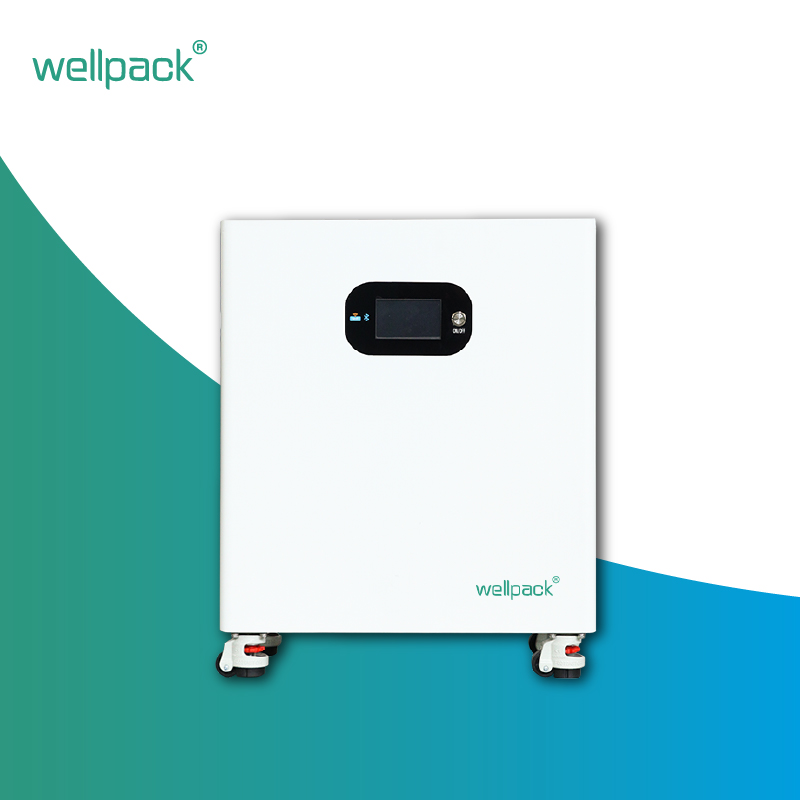
The Wellpack WPH10F-01 household energy storage battery delivers 10.54 kWh of usable capacity (51.2 V, 206 Ah) built on LiFePO4 cells, with a maximum continuous charge and discharge current of 150 A. Its all-in-one, plug-and-play design eliminates installation overhead, while built-in wheels make it movable between indoor, outdoor, home, or office scenarios. The integrated smart BMS supports CAN, RS485, and other mainstream communication protocols, ensuring compatibility with most solar inverters and home automation systems. A high-definition digital display shows real-time voltage, current, power, and temperature, and a free mobile app enables remote on/off control and mode switching with no subscription fees. With a cycle life of ≥4,000 times and a durable sheet-metal enclosure, the WPH10F-01 balances capacity, safety, and longevity for daily residential use and emergency backup alike. For homeowners evaluating a 10 kWh-class household energy storage solution, it represents a strong combination of specifications and practical deployment flexibility—request a free consultation or quote from Wellpack to confirm configuration, lead time (15–45 days), and compatibility with your existing inverter.