 WellPack
Home Battery Storage Cost vs Long-Term Savings
What Does a Home Battery Actually Cost in 2026
If you are shopping for home battery storage, the first number you will see is the upfront price. In 2026, a typical residential solar battery storage system costs between $10,000 and $20,000 installed before any incentives. That is a wide range, and the reason is simple—there is no single product that fits every home.
The cost per kilowatt-hour is a more useful way to compare systems. Most homeowners pay $800 to $1,200 per usable kWh installed. A 10 kWh system will cost less per kWh than a 5 kWh system because the installation labor and inverter costs are spread across more capacity. The battery cells themselves are only part of the bill. You are also paying for the inverter, the battery management system, the energy management software, shipping, and the electrical work required to connect everything safely to your home.
One thing to keep in mind: the price you see online for a standalone battery unit is not the full cost. Without professional installation and grid connection, that unit is just a box. The real price is always the fully commissioned system.
Where the Savings Come From
Home battery storage saves you money in three main ways.
First, time-of-use arbitrage. Many utilities charge different rates depending on the time of day. Power is expensive in the evening when everyone gets home and turns on appliances, and cheaper late at night or in the middle of the day. A battery lets you store electricity when it is cheap and use it when it is expensive. The gap between off-peak and peak rates determines how much you save this way.
Second, maximizing your solar investment. If you already have solar panels, you know they produce the most power in the middle of the day—when you are probably at work and using very little electricity. Without a battery, that extra power goes back to the grid, and you get paid a fraction of what you would have saved by using it yourself. A battery captures that surplus so you can use it in the evening. This is often the biggest source of savings for homeowners with solar.
Third, backup power during outages. This one is harder to put a dollar figure on, but it matters. In 2026, 53% of homeowners say the power grid has become less reliable, and 62% say extreme weather is affecting where they live. Avoiding spoiled food, lost work hours, and the inconvenience of a blackout has real value. A battery gives you that peace of mind.
How Long Until You Break Even
The payback period is the question most people actually care about. For an average household with solar panels and a battery that is well matched to their consumption, the payback period in 2026 is typically between five and eight years. In some regions with high electricity rates or generous incentives, it can be as short as five to six years.
Several factors affect your payback. The biggest one is the gap between what you pay for grid electricity and what you get paid for exporting solar power. If your utility pays you very little for exported power and charges a lot for peak-hour electricity, a battery pays for itself much faster. Your energy habits matter too—households that use more power in the evening see bigger savings from shifting that usage to stored solar energy.
Incentives can dramatically shorten the payback period. Federal tax credits, state rebates, and VAT reductions (like the 0% VAT available in the UK until March 2027) can cut your net cost significantly. Always check what is available in your area before you calculate your payback.
Battery Lifespan and Replacement Costs
A home battery is not a one-time purchase. It will degrade over time, just like the battery in your phone or laptop. The key metric to look for is cycle life—how many charge and discharge cycles the battery can handle before it drops to 80% of its original capacity.
In 2026, Lithium Iron Phosphate (LFP) batteries are the dominant standard for home storage. They offer a significantly longer lifespan than older chemistries. A good LFP battery is rated for 6,000 to 8,000 cycles. If you cycle it once per day, that is 16 to 22 years of useful life. Compare that to older NMC batteries, which typically last 1,000 to 2,500 cycles.
What does this mean for your savings? A battery that lasts 15 years gives you a much better return than one that needs replacement after eight years. When comparing systems, always check the cycle life warranty—6,000 cycles at one cycle per day equals over 16 years; 4,000 cycles equals about 11 years. That difference matters for your long-term savings.
What to Look for When Choosing a System
Price per kWh is important, but it is not the only thing that matters. Here are the practical factors that actually affect your experience.
Inverter compatibility is a hidden cost that many homeowners miss. Some batteries are locked to one inverter brand. If you already have a solar system with a specific inverter, you may need to replace it to accommodate a new battery—and that can cost an extra $2,000 to $5,000. For new installations, choose the battery first, then the inverter.
Round-trip efficiency tells you how much electricity you lose every time you charge and discharge the battery. The difference between 94% and 97% efficiency might not sound like much, but over 6,000 cycles, that 3% loss adds up.
Installation flexibility matters if you have limited space. Check whether the system is indoor or outdoor rated, what the IP rating is, and whether it is wall-mounted or floor-standing. Some systems are designed to be modular, letting you start with a smaller capacity and add more later as your needs grow.
Chemistry is no longer a debate for most homeowners—LFP wins on safety, thermal stability, and total cost of ownership. It is cobalt-free, more environmentally sustainable, and has a much higher resistance to thermal runaway.
A Solid Option Worth Considering
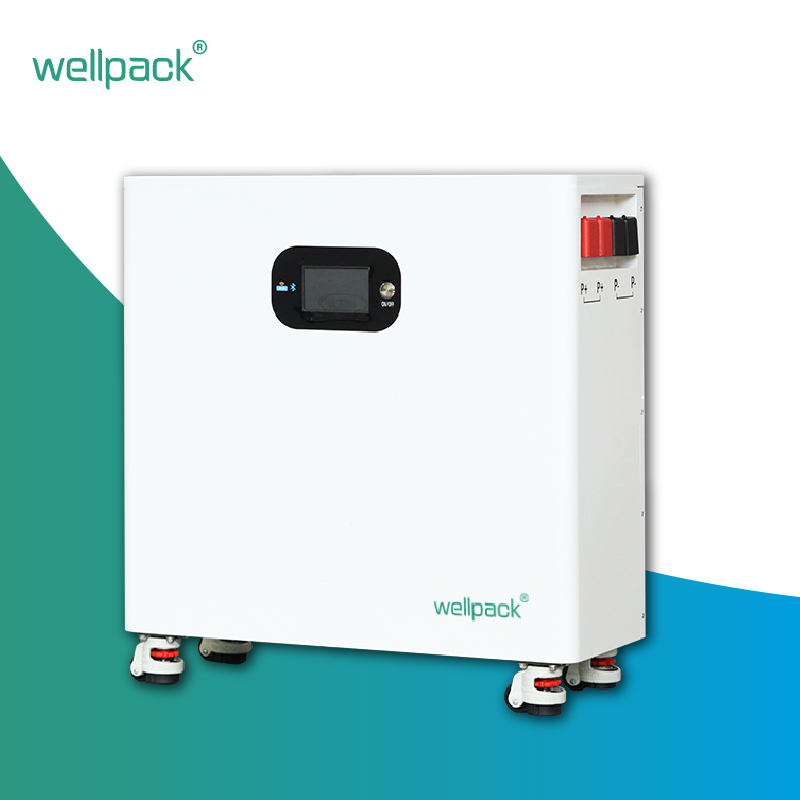
If you are looking for a reliable residential energy storage solution, the Wellpack 16.07kWh Residential Solar Energy Storage Solution is worth a close look. Wellpack, a brand of Better Group, specializes in the R&D and manufacturing of advanced battery energy storage systems and has been recognized as a National High-Tech Enterprise. This particular system uses LFP battery cells, which means you get the safety, long cycle life, and thermal stability that have made LFP the preferred chemistry for home storage in 2026. The 16.07kWh capacity sits right in the sweet spot for most households—enough to cover evening usage and provide meaningful backup during outages without overpaying for capacity you do not need. It is designed for seamless integration with solar setups, helping you maximize self-consumption and reduce your reliance on the grid. If you are serious about cutting your electricity bills and gaining energy independence, this is a system that delivers both performance and long-term value. Learn more about the Wellpack 16.07kWh system here.